I recently branched my career off into research and completed my Master’s degree in neuroscience. I have been practicing as a Naturopath since 2018 and my motivation moving into this research environment was to explore ways of integrating the natural substances I use in clinic into a more constructed research environment. So in light of that, I thought it would be appropriate for my first post since returning to combine information that branches from nutrition into neuroscience!
You may have heard of NAD+ before. Nicotinamide Adenine Dinucleotide aka NAD+, is like a cellular power player. It’s a coenzyme found in all living cells, and has two forms, NAD+ and NADH, and they work together to keep the cell in balance.
NAD+ plays a role in many cellular processes including:
- Mitochondrial function
- Cellular senescence
- Repairing DNA
- Circadian rhythm
- Gene expression
- ATP production
- Calcium signalling
- Stress response
- Immune functions
NAD+ has become very popular over the last 4(ish) years as awareness of it’s neuroprotective ability has spread through more research being published. It achieves neuroprotection mainly through its role in down regulating inflammation, and supporting cellular senescence (which is essentially the ageing of cells).
Amazingly it is possible to increase NAD+ through supplementation, with a few forms of a humble B vitamin; vitamin B3.
This diagram shows the pathways available to synthesise NAD+ from a few different supplements.
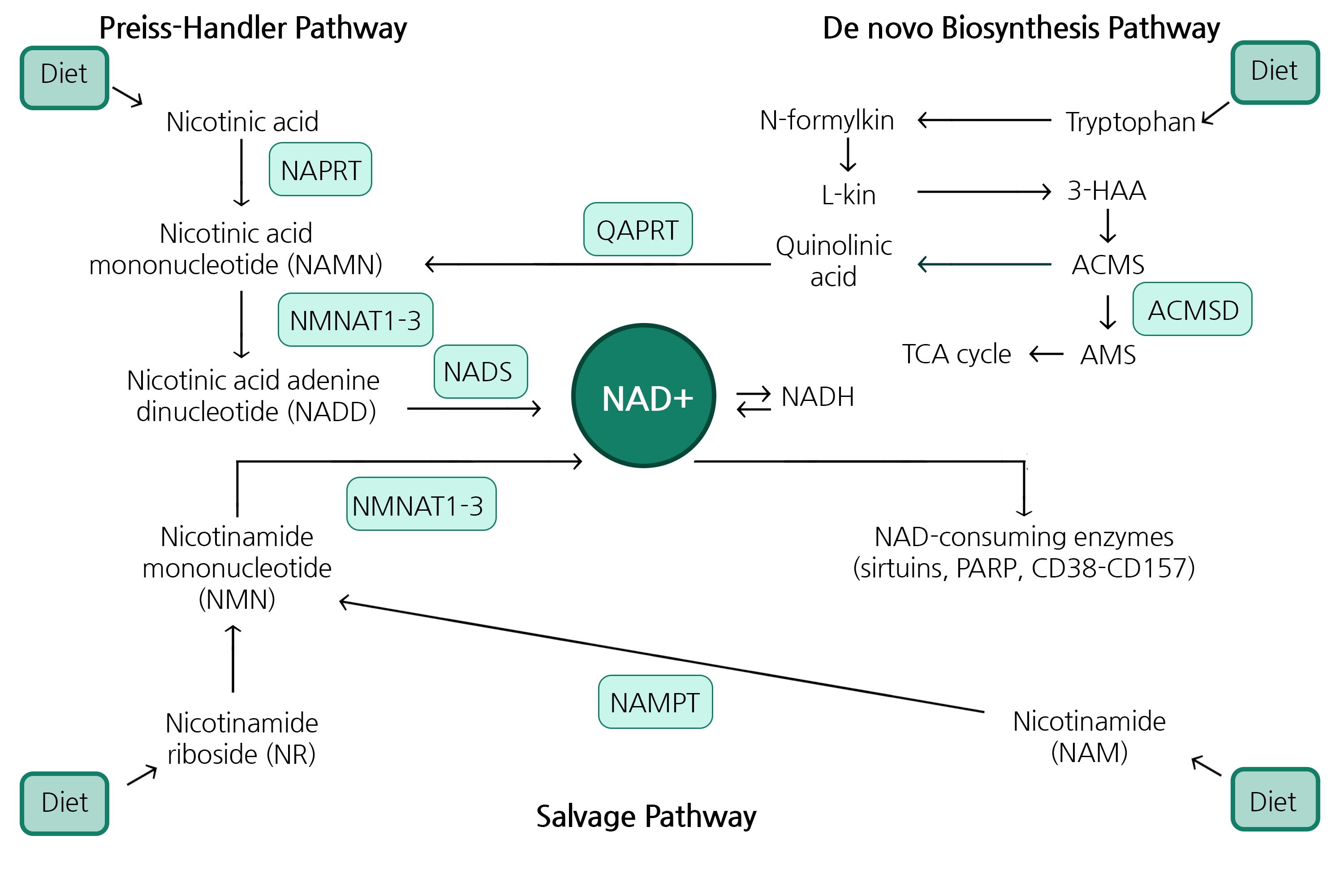
Preiss-Handler Pathway: uses nicotinic acid as a precursor. This form of B3 is readily available as a single nutritional supplement, however can cause an unpleasant flushing effect when dosed over 50 mg at one time. This is called a Niacin flush.
De novo biosynthesis pathway: this pathway uses the amino acid tryptophan, synthesised from our daily protein intake. While it is completely possible to supply tryptophan therapeutically, there are a lot of steps for the body to complete to eventually arrive at NAD+ as an end product. Not to mention Tryptophan being used for a number of other things such as a precursor for serotonin production, and also coming with some unpleasant side effects if dosed incorrectly.
Salvage pathway: this comes from dietary sources of nicotinamide, nicotinamide riboside which has a much shorter synthesis pathway to become NAD+.
Nicotinamide riboside is a form of Vitamin B3 and can be given as Nicotinamide riboside chloride. A bunch of studies have been undertaken on Nicotinamide riboside chloride in both animals and humans and found it to have a favourable safety profile, for example no flushing like nicotinic acid. In November 2019, the TGA approved Nicotinamide riboside for use in Australian supplements. Only recently have a few products become available from Australian manufacturers (YAY).
So what about NMN? NMN was available online from overseas suppliers, but in November 2022 the FDA banned sales of NMN based upon the fact it performs like a “drug” not a supplement. This is because a company called Metro Biotech have a pending application for their “highly purified form” to be listed as an Investigational New Drug. This means that if it’s approved, NMN moves from being classified a nutritional supplement into a therapeutic drug! If that isn’t a testament to how good this avenue of therapy for brain health is, then I don’t know what is!
If you are interested in supplementing with nicotinamide riboside chloride to support your brain health then don’t hesitate to book a consult with me so we can get started on your health goals.
References
Campbell, 2022, Nutrients, https://doi.org/10.3390/nu14153231
(images courtesy of bpsbioscience.com)
 Health by Gigi
Leave a comment